
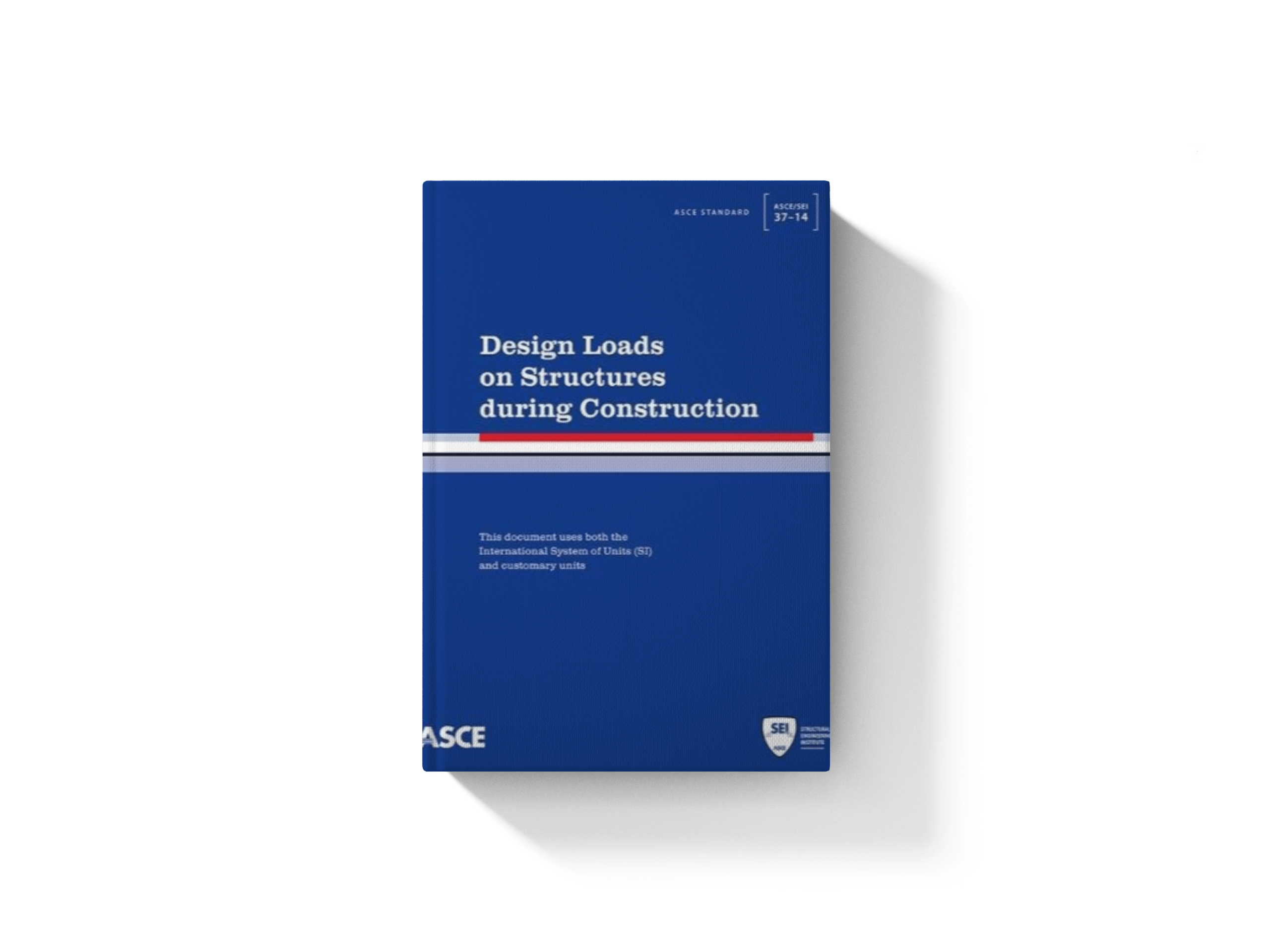

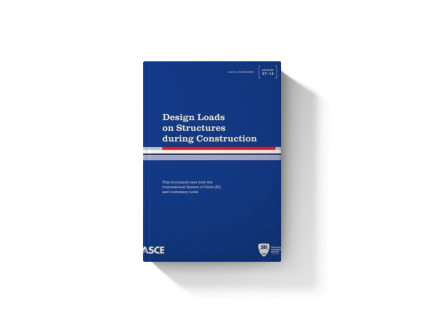
During the construction phase of a structure, it’s crucial to consider design loads that accommodate the temporary nature of loading and the variability of temporary loads. Design Loads on Structures during Construction, ASCE/SEI 37-14, outlines the minimum design requirements for construction loads, load combinations, and load factors affecting buildings and other structures under construction. This standard addresses partially completed structures as well as temporary support and access structures utilized during construction, ensuring safety and structural integrity.
The specified loads are suitable for use with both strength design criteria, such as ultimate strength design (USD) and load and resistance factor design (LRFD), and allowable stress design (ASD) criteria, and are applicable to all conventional construction methods. Key topics covered include load factors and combinations, dead and live loads, construction loads, lateral earth pressure, and environmental loads.
Notably, the environmental load provisions in this edition have been aligned with those of Minimum Design Loads for Buildings and Other Structures, ASCE/SEI 7-10. As ASCE/SEI 7-10 doesn’t specifically address loads during construction, adjustments were made to the environmental loads in this standard to account for the construction period’s duration.
This updated edition of Standard 37 incorporates probabilistic analysis, observations of construction practices, and expert opinions, reflecting advancements and insights accumulated since the original 2002 edition. Intended for structural engineers, construction engineers, design professionals, code officials, and building owners, this standard serves as a valuable resource for ensuring the safety and reliability of structures under construction.
Reviews
There are no reviews yet.